Flexilay
HomeGuide

Buy Now Pay Later alternatives for merchants

Ways to offer flexible payments without high BNPL fees, customer debt or lending risk on your side.

Sign Up
Buy Now Pay Later alternatives for merchants

Buy Now Pay Later helped a lot of stores lift conversion, but the trade-offs have become hard to ignore. Merchant fees are far higher than card processing, a slice of every sale goes to the BNPL provider, and your customers can end up carrying debt and late fees on a purchase they could have simply paid off over time.

Since June 2025, BNPL in Australia is regulated as credit, which has sharpened the question for ethically minded brands: do you want your checkout pushing customers toward borrowing, or toward a debt-free way to spread the cost? This guide walks through the main alternatives, how they differ, and where a modern LayBy approach fits.

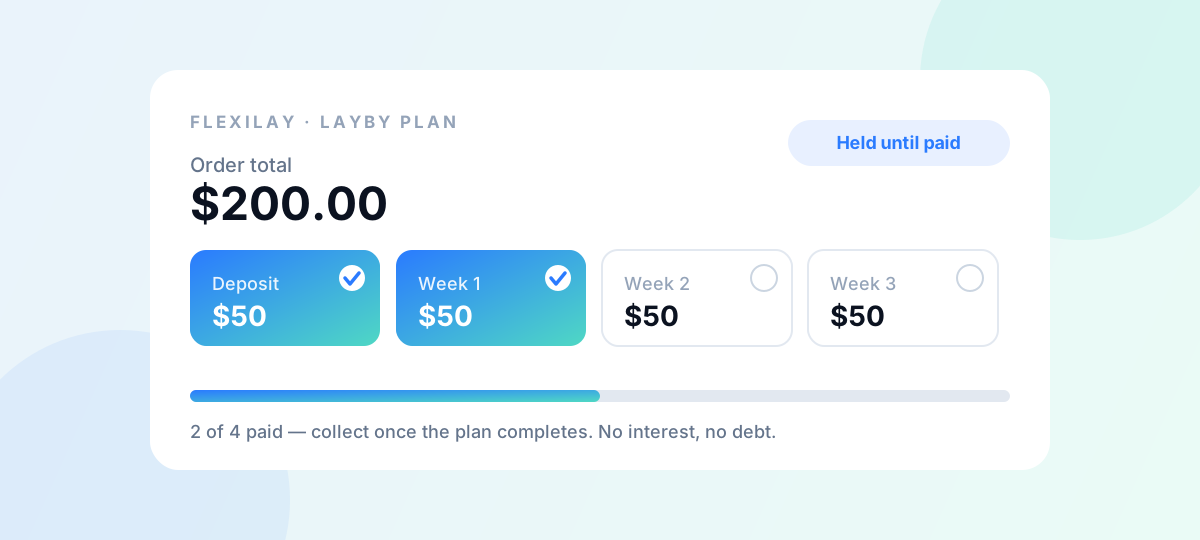
Flexilay LayBy payment plan — a deposit plus scheduled instalments, collected once paid off.
Flat-lay of a phone showing a clear payment schedule (weekly instalments) next to a shopping bag — illustrating scheduling rather than borrowing.Screenshot or mockup of the Flexilay dashboard showing a LayBy plan progressing through scheduled payments via Stripe.

Alternatives to BNPL

These are the realistic options if you want to offer flexible payments without the BNPL fee load or the lending model. They are approaches, not a strict ranking — pick what matches your margins and your customers.

Modern LayBy (Flexilay)

Our pick

Customers reserve an item and pay it off on a schedule — weekly, fortnightly or monthly — with no credit checks, no interest and no debt. You keep control of the goods until the plan completes, and payments run through your own Stripe account, so Flexilay never holds your money. It is payment scheduling, not lending, so there is no lending risk or credit-licensing burden on you.

Traditional layby

The classic model: the customer pays in instalments and collects the goods once paid in full. Reliable and debt-free, but managing it manually with spreadsheets, reminders and refunds is slow and error-prone — which is exactly the gap modern LayBy software fills.

Deposits / part-payment

Take a deposit up front and the balance later. Good for made-to-order or high-value items, but on its own it does not give the customer a structured schedule or automate the follow-up payments.

Direct debit / instalments run by the merchant

Set up recurring charges against the customer's card or bank account yourself. Flexible, but you take on the admin, the failed-payment chasing and the reconciliation — and you need a system to schedule and track it all.

Keep BNPL but add a debt-free option

You do not have to choose one or the other. Many stores keep BNPL at checkout for customers who want it and add a LayBy option alongside it, so price-conscious or debt-averse shoppers have a path that does not involve borrowing.

Why merchants move away from BNPL

High merchant fees

BNPL commissions in Australia are commonly quoted around 4–6% plus a fixed per-transaction fee — well above standard card processing — so a meaningful share of each sale leaves your margin.

Customers pushed into debt

ASIC found around one in five BNPL users miss payments. Late fees and missed payments turn a simple purchase into a debt problem, which is not the experience many brands want to be associated with.

Brand and ethics

If your customers value financial wellbeing, sending them to a credit product at checkout can sit awkwardly with your brand. A debt-free option signals you are on their side.

Lending and compliance risk

BNPL is now regulated as credit in Australia. Scheduling a customer's own payments avoids the lending model entirely, keeping that risk and compliance load off your business.

What to look for in an alternative

Not every alternative is equal. As you compare options, weigh them against a few practical questions.

Who holds the money?

Look for payments that flow through your own payment account rather than a third party that holds and later remits your funds.

Is it lending?

Scheduling a customer's own payments is not lending. That distinction keeps credit risk and licensing obligations off your plate.

What does it cost?

Compare total cost honestly. A small per-completed-order fee with no monthly or setup cost is very different from a percentage of every sale.

Does it fit your stack?

Check it connects to the platform you already run, so you are not rekeying orders or reconciling by hand.

How Flexilay works (scheduling, not lending)

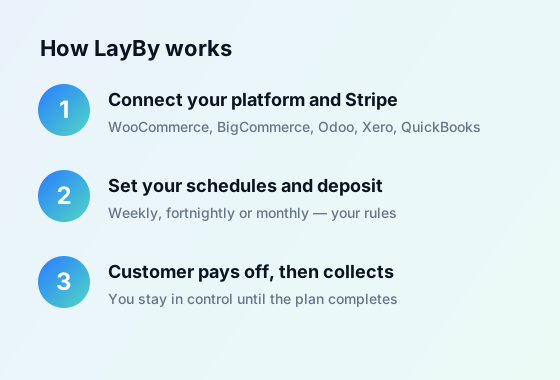
Flexilay is a modern take on LayBy. A customer chooses to pay an item off over time; you set the schedule — weekly, fortnightly or monthly — and Flexilay automates the reminders, payments and tracking.

Payments are collected through your own Stripe account, so the money is always yours and Flexilay never holds funds. You keep control of the goods until the plan is paid in full. There are no credit checks, no interest and no debt for the customer, and because nobody is lending anything, there is no lending risk or credit-licensing burden for you.

Your Stripe, your money

Payments run through the merchant's own Stripe account. Flexilay never holds or remits your funds.

Live connectors

Works with WooCommerce, BigCommerce, Odoo, Xero and QuickBooks today, with Shopify coming soon.

Simple, fair pricing

Free to start with no monthly or setup fees — just a small fee per completed order. See the pricing page for details.

Frequently asked questions

What is the best alternative to Buy Now Pay Later for my store?
It depends on your margins and customers. If you want a debt-free, automated option with no lending risk, a modern LayBy approach like Flexilay is usually the closest fit. Traditional layby, deposits and merchant-run instalments are also viable, with more manual admin.
Is LayBy the same as Buy Now Pay Later?
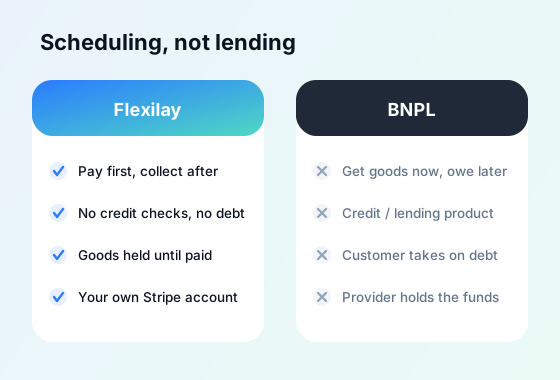
No. With BNPL the customer takes the goods immediately and repays a lender over time. With LayBy the customer pays off the item on a schedule and you keep the goods until it is paid in full. LayBy is payment scheduling, not borrowing, so there is no debt and no interest.
How much do BNPL providers charge merchants?
Industry sources commonly quote BNPL merchant fees in Australia at around 4–6% of the sale plus a fixed per-transaction fee, which is well above standard card processing. Rates vary by provider and volume, so check your own agreement.
Does an alternative like Flexilay involve credit checks or interest?
No. Flexilay does not run credit checks, charge interest or create debt. The customer simply pays for their purchase across a schedule you set, using their own funds.
Who holds the money during a Flexilay plan?
You do. Payments are collected through your own Stripe account, so the funds are always yours. Flexilay never holds or remits your money.
Can I keep BNPL and add a debt-free option too?
Yes. Many stores keep BNPL at checkout and add LayBy alongside it, so customers who prefer not to borrow have an option that suits them.


Offer flexible payments without the debt

Give customers a debt-free way to pay over time, with money flowing through your own Stripe account and no lending risk on your side.

Sign Up
Sources
Back to home