Flexilay
HomeLayby explained

Layby vs layaway: the same thing, different country

Layby and layaway describe the exact same way to pay — reserve an item, pay it off in instalments, and collect it once it's fully paid. The only real difference is which country you're in.

Sign Up
Layby vs layaway: the same thing, different country

If you've seen both "layby" and "layaway" and wondered what separates them, the short answer is: nothing about how they work. They're two names for the same long-standing arrangement — you reserve a purchase, pay it off over time in instalments, and take the goods home once the final payment clears. There's no credit, no interest and no debt; the store simply holds the item until it's paid for.

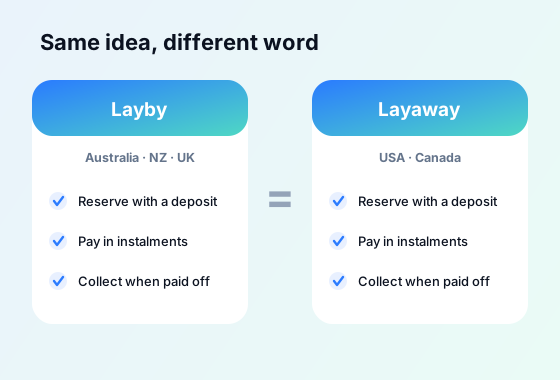
The split is purely regional. "Lay-by" (also written "layby" or "laybuy") is the term used across Australia, New Zealand, the United Kingdom, Ireland and South Africa. "Layaway" is the American and Canadian word for precisely the same thing. Same mechanism, different vocabulary — much like "car park" and "parking lot", or "trolley" and "shopping cart".

Flexilay is modern software for running this arrangement online, whichever word your market uses. Customers pay in scheduled instalments to your own Stripe account, and you release the goods when the plan is complete — the classic layby (or layaway) model, without you ever becoming a lender.
Layby equals layaway — the same instalment arrangement under two regional names.
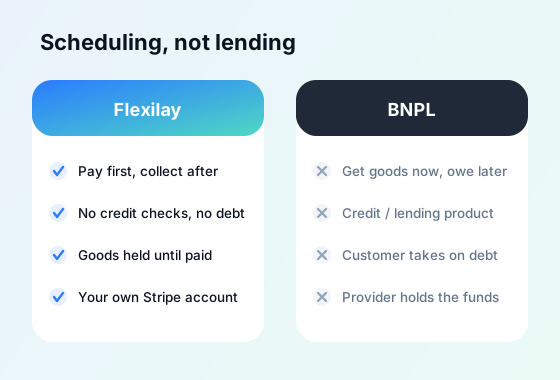
Comparison graphic showing layby/layaway (pay first, collect after) versus BNPL (get goods now, owe later).Three-step flow: reserve with a deposit, pay instalments on a schedule, collect once paid in full.

Same idea, different word

Layby and layaway are regional names for one concept: paying for something gradually before you receive it. Where you live decides which word you'll hear.

Australia & New Zealand

"Lay-by" or "layby" — a fixture of Australian and Kiwi retail for decades, from department stores to local shops.

United States & Canada

"Layaway" — the American term, made famous by big-box retailers offering seasonal layaway plans.

United Kingdom & Ireland

"Lay-by" is used here too, alongside historical schemes like Christmas savings clubs that worked the same way.

South Africa

"Lay-by" is widely used and even defined in consumer law, covering goods reserved and paid off in instalments.

How layby and layaway both work

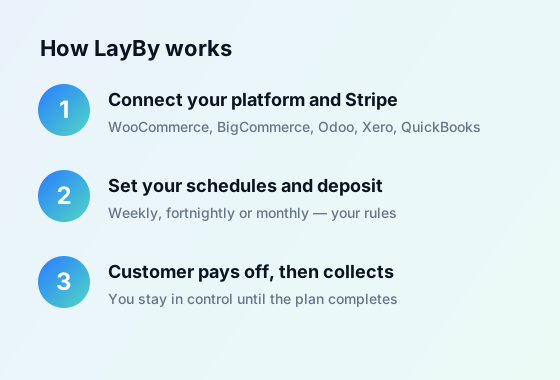
Strip away the name and the steps are identical in every country. The shopper picks an item, pays a deposit to reserve it, and the retailer sets the goods aside. The balance is paid off in agreed instalments — weekly, fortnightly or monthly — and once the final payment is made, the customer collects their purchase.

Crucially, the goods stay with the retailer until the plan is paid in full. Nobody is borrowing money and nobody is taking on debt, which is what sets layby and layaway apart from credit-based options.

Why layby and layaway are not Buy Now, Pay Later

Because all three spread payments over time, layby, layaway and Buy Now, Pay Later (BNPL) are easy to lump together — but layby/layaway sit on the opposite side of a clear line. With layby and layaway you pay first and collect after, so there's no lending, no credit check and no interest. With BNPL you receive the goods immediately and repay a balance afterwards, which is consumer credit.

This distinction matters for shoppers who want to avoid debt and for businesses that want to offer flexibility without the compliance burden of being a lender. Flexilay deliberately follows the layby/layaway model: pay first, collect after.

A brief history of layaway and layby

Layaway rose to prominence in the United States during the Great Depression of the 1930s, when paying gradually was one of the few ways households could afford larger purchases. It faded as credit cards became widespread, then saw a strong revival during the 2008 financial downturn as shoppers looked for ways to buy without going into debt.

In Australia, New Zealand and the UK, lay-by followed a similar arc and never really went away — it remained a trusted, debt-free way to buy. Today the same idea is moving online, and that's exactly the gap Flexilay fills: bringing layby and layaway into modern ecommerce and invoicing.

Run layby or layaway online with Flexilay

Deposit and schedule

The customer reserves their order with a deposit and Flexilay builds an instalment plan — weekly, fortnightly or monthly — for the balance.

Automatic collection

Each instalment is collected through your own Stripe account, so the money lands directly with you. Flexilay never holds customer funds.

Goods released on completion

You stay in control of the order until it's paid in full, then fulfil it — the traditional layby and layaway model, with no debt.

Works for any market

Whether your customers call it layby, laybuy or layaway, the experience is the same: a clear schedule, a self-service portal and full visibility for you.

Frequently asked questions

Is layby the same as layaway?
Yes. Layby and layaway are two names for the same arrangement: you reserve an item, pay it off in instalments, and collect it once it's fully paid. "Layby" (or "lay-by") is used in Australia, New Zealand and the UK, while "layaway" is the American and Canadian term.
Why is it called layby in Australia but layaway in America?
It's regional vocabulary, not a difference in how it works. Australia, New Zealand, the UK and South Africa adopted "lay-by", while the United States and Canada use "layaway". Both describe goods that are laid aside and paid off over time.
What is the difference between layby, laybuy and layaway?
There's no functional difference — all three mean reserving a purchase and paying it off in instalments before collecting it. "Laybuy" is simply another spelling of layby. (Note: "Laybuy" is also the name of a separate Buy Now, Pay Later brand, which is lending rather than layby.)
Is layaway a type of credit or loan?
No. With layaway and layby you pay before you receive the goods, so there's no borrowing, no credit check and no interest. This is what separates them from Buy Now, Pay Later and other credit products.
Can I offer layaway or layby in my online store?
Yes. Flexilay is software that runs layby and layaway online: customers pay in scheduled instalments to your own Stripe account, and you release the order once it's paid in full — no lending and no holding of customer funds.
Does Flexilay work whether my customers say layby or layaway?
Absolutely. The model is identical regardless of the word your market uses. Flexilay handles the deposit, the payment schedule, automatic collection and order release the same way for every customer.

Offer layby or layaway in your store

Let customers reserve an order and pay it off over time — collect instalments on your own Stripe account and release the goods once they're paid off. No lending, no debt.

Sign Up
Sources
  • "Lay-by" is the term used in Australia, New Zealand, the UK, Ireland and South Africa, while "layaway" is used in the United States and Canada for the same arrangement. Layaway (Wikipedia)
  • Layaway became popular in the United States during the Great Depression and saw a resurgence during the 2008 financial crisis. Layaway (Wikipedia)
Back to home