
Flexilay
HomeComparison

Flexilay vs Laybuy

The name says layby, but the product is buy now pay later. Here's how Flexilay's genuine layby scheduling differs from Laybuy's BNPL lending.

Sign Up
FlexilayVSLaybuy

Modern LayBy vs Laybuy — the honest, side-by-side comparison.

It's an easy assumption to make: with a name like Laybuy, you'd think it works like traditional layby, where a customer pays off an item over time and collects it once it's fully paid. In reality, Laybuy is a buy now pay later (BNPL) product. The customer takes the goods home immediately and repays the merchant's price over six interest-free weekly instalments, with Laybuy fronting the money and carrying the consumer credit.

Flexilay is the opposite by design. It's genuine layby, or payment scheduling: the customer commits to a plan, pays over time, and the merchant releases the goods once the plan completes. There's no lending, no credit, no debt, and no third party paying out in advance. This page breaks down that name-versus-reality difference so you can choose the model that actually fits your store.
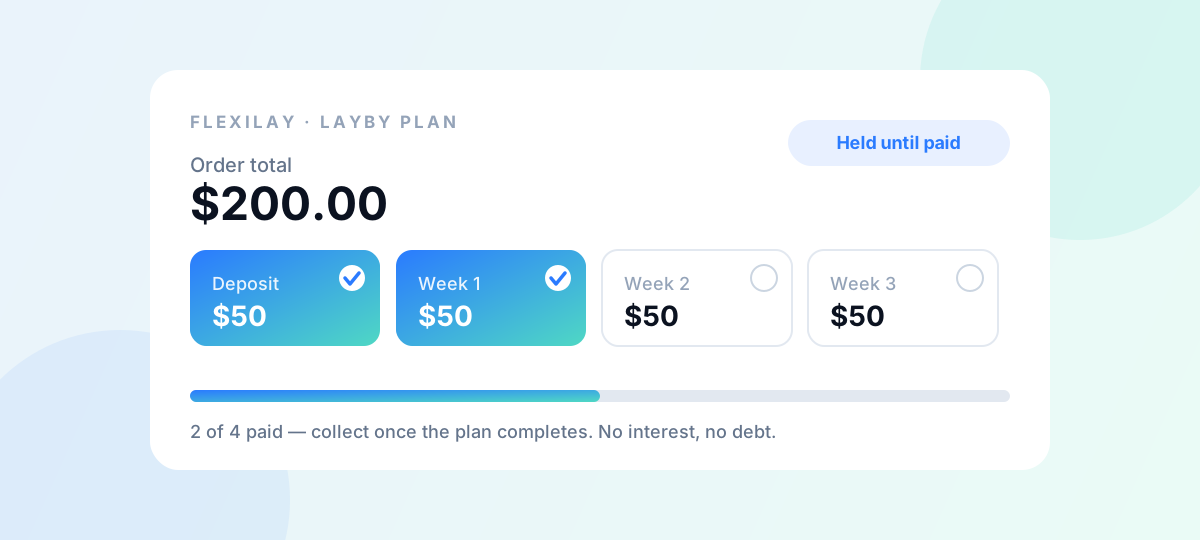
Flexilay LayBy payment plan — a deposit plus scheduled instalments, collected once paid off.
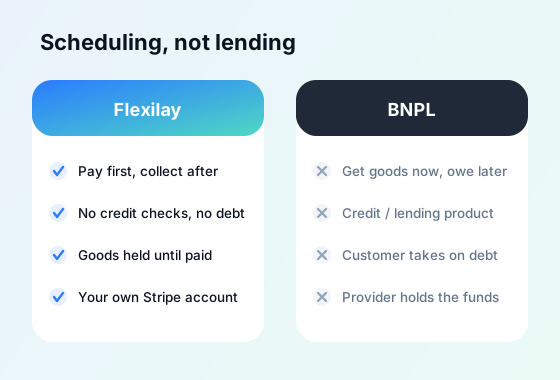
Simple two-column infographic contrasting 'Pay first, then collect' (Flexilay) versus 'Take now, repay over 6 weeks' (Laybuy/BNPL).Australian small-business retailer at a point-of-sale screen showing a Flexilay payment schedule, reinforcing the locally-built, merchant-controlled angle.
Feature
Flexilay
LaybuyLaybuy
What it is
Genuine layby / payment scheduling
Buy now pay later (BNPL) lending
Who funds the purchase
No one — the customer simply pays in instalments
Laybuy (now Klarna) pays the merchant upfront
Credit checks
None — it's not credit
Yes — Laybuy credit-assesses customers and reports to Experian
When goods are released
On completion, once the plan is fully paid
Immediately, at checkout
Customer debt
None — nothing is owed; they pay toward their own order
Yes — the customer owes the balance over six weeks
Number / cadence of payments
Flexible schedule set by the merchant
6 equal interest-free weekly instalments
Merchant fee
Free to start; small per-completed-order fee (see pricing)
Per-transaction merchant fee plus a fixed fee
Lending / compliance risk to merchant
None — no credit is offered
Consumer-credit product; sits within BNPL regulation
Who holds the funds
The merchant — payments flow into your own Stripe account
Laybuy collects from the customer and settles the merchant

Laybuy sounds like layby — but it's BNPL

The clearest way to tell layby from BNPL is to ask one question: when does the customer get the goods? With traditional layby, they collect after they've finished paying. With BNPL, they take it home first and repay later.

Laybuy is firmly in the second camp. A customer pays the first of six weekly instalments at checkout, takes the product immediately, and Laybuy pays the merchant in full upfront while carrying the consumer credit. That's lending, not layby — which is also why it involves credit assessment and credit reporting.

What real layby looks like with Flexilay

Flexilay is modern LayBy: payment scheduling, not lending. The customer reserves an order and pays it off over a schedule you set. There's no interest, no credit check, and no debt, because they're paying toward their own purchase, not borrowing against it.

Pay first, collect after

You keep control of the goods until the plan completes — the original layby promise.

No lending, no credit

Nothing is loaned, so there are no credit checks, no interest, and no customer debt.

Your Stripe, your money

Payments go straight into your own Stripe account. Flexilay never holds your funds.

No BNPL compliance burden

Because no credit is offered, you don't take on the lending risk or regulation that comes with BNPL.

Why merchants choose Flexilay

Flexilay is built in Australia for stores that want the conversion benefits of spreading payments without becoming a lender or paying a financier. It's free to start, with no monthly or setup fees and a small fee only on completed orders.

Live connectors

WooCommerce, BigCommerce, Odoo, Xero and QuickBooks today, with Shopify coming soon.

Keep control of stock

Goods stay with you until the customer has paid in full — no chargebacks on unpaid items.

Transparent pricing

No upfront cost and no monthly fee; you only pay a small amount per completed order.

Frequently asked questions

Is Laybuy the same as layby?
No. Despite the name, Laybuy is a buy now pay later (BNPL) service. The customer receives the goods immediately and repays over six weekly instalments, whereas traditional layby means paying first and collecting once the item is fully paid off.
Is Laybuy BNPL?
Yes. Laybuy is a buy now pay later provider founded in New Zealand in 2017. It splits a purchase into six interest-free weekly payments and pays the merchant upfront while carrying the consumer credit.
Does the customer get the goods straight away with Laybuy?
Yes. With Laybuy the customer takes the product home at checkout after paying the first instalment. With Flexilay's genuine layby, the customer collects the goods only once the payment plan is complete.
Does Flexilay do credit checks like Laybuy?
No. Flexilay is payment scheduling, not lending, so there are no credit checks, no interest and no customer debt. Laybuy, as a BNPL/credit product, credit-assesses customers and reports repayment data to a credit reference agency.
Is Laybuy still operating?
Laybuy ceased operations and entered receivership in June 2024. Klarna acquired its New Zealand assets in August 2024 and relaunched the Laybuy brand. It remains a BNPL product.
Who holds the money with Flexilay?
You do. Customer payments flow into your own Stripe account, so Flexilay never holds your funds. With Laybuy, the provider collects instalments from the customer and settles the merchant.

Offer real layby — not a loan

Let customers reserve and pay over time, with the goods released on completion and the money in your own Stripe account. Free to start, no monthly fees.

Sign Up
Sources
Back to home